What is our English Online Exam? (Seniors)
The NextGen Olympiad English Online Exam is designed to challenge and inspire advanced linguistic minds through our prestigious international competition. Built on Australian curriculum standards, this exam offers senior students worldwide the opportunity to demonstrate their English language excellence and compete with peers globally at the highest academic level.
Our English Online Exam features 25 carefully crafted multiple-choice questions designed to test reading comprehension, vocabulary, grammar, and language skills appropriate for senior students. Students have 60 minutes to complete the exam, with questions covering English language concepts that encourage critical thinking and clear communication.
Exam Format
- 25 multiple-choice questions
- 50 minute duration
- Cambridge curriculum-aligned Content
- Multi-language support available
- Secure online proctoring
Scoring System
- 4 points for each correct answer
- 3 wrong answers void 1 correct answer
- Maximum score: 100 points
Global Round Qualification
The top 60% of performers will qualify for our prestigious Global Round in Sydney, Australia (April 2027), featuring enhanced prizes, international recognition, and an unforgettable educational experience.
Important Information
- Exam Date: 24 October 2026
- Registration Fee: IDR525K per student
- Download Complete Exam Rules & Guidelines
- Access All Sample Question Papers
- Download Online Round Poster
The Levels It's Broken Into
There are three categories of participation for our Senior English Online Exam:
- Category 4– Ages 12-13 (Year 7-8)
- Category 5– Ages 14-15 (Year 9-10)
- Category 6– Ages 16-17 (Year 11-12)
Each category is specifically designed with age-appropriate English language concepts including reading comprehension, vocabulary development, grammar, and communication skills while maintaining the challenge and engagement that makes our competition both educational and exciting.
Exam Topics
Senior Level 1 - Exam Topics⌄
Year 7-8 (Senior Level 1)
- Advanced Noun and Verb Usage – nominalisation, verbals, accurate subject–verb agreement in complex sentences
- Modality and Tone – using modal verbs (must, might, should) and adjusting tone/formality for audience and purpose
- Punctuation Mastery – colons, semicolons, dashes, ellipses, hyphens, correct quotation and dialogue formatting
- Cohesive Devices – pronoun referencing, transition words and phrases, lexical chains for smooth text flow
- Vocabulary Expansion and Word Precision – academic word lists, connotation vs. denotation, selecting words for effect
- Sentence Variety and Syntax – compound–complex, periodic, and cumulative sentence structures
- Reading Comprehension and Critical Analysis – interpreting implicit meaning, identifying bias, evaluating author's purpose and reliability of sources
- Literary Devices and Techniques – metaphor, simile, personification, irony, foreshadowing, symbolism
- Genre Conventions – identifying features of narrative, persuasive, expository, analytical, and transactional texts
- Argument and Persuasive Techniques – claims, evidence, counterclaims, logical fallacies
- Comparative Text Analysis – comparing themes, characters, and techniques between two short texts
- Media Literacy – recognising persuasive devices, bias, and visual language features in advertisements and infographics
Senior Level 2 - Exam Topics⌄
Year 9-10 (Senior Level 2)
- Advanced Grammar and Syntax – complex and compound–complex clauses, clause embedding, subjunctive mood, parallelism
- Punctuation Precision – advanced use of semicolons, colons, em dashes, parentheses, ellipses for stylistic effect
- Vocabulary and Morphology – academic vocabulary, Latin/Greek roots, etymology, register and tone variation
- Text Cohesion and Coherence – thematic progression, information flow, cohesive devices in extended texts
- Stylistic and Rhetorical Devices – irony, satire, rhetorical questions, antithesis, euphemism, allusion
- Critical Reading and Interpretation – detecting bias, evaluating perspective, assessing text reliability, identifying persuasive techniques
- Comparative Text Analysis – comparing themes, style, and tone across different text types (poetry, prose, drama, multimodal)
- Literary Context – linking text meaning to historical, cultural, or social contexts (introductory level)
- Argument and Persuasive Techniques – ethos, pathos, logos, refutation strategies, recognition of logical fallacies
- Genre Conventions – features of poetry, short story, drama, novel, persuasive, and expository writing
- Media Literacy – analysing advertisements, film stills, social media posts, and graphic novel panels for visual and language techniques
Senior Level 3 - Exam Topics⌄
Year 11-12 (Senior Level 3)
- Advanced Sentence Structures – nominalisation, appositives, parallelism, inversion, sentence manipulation for emphasis
- Language for Argumentation – rhetorical appeals (ethos, pathos, logos), tone, register, modality, persuasive intent
- Punctuation and Style – mastery of em dashes, colons, semicolons, parentheses, ellipses for pacing, clarity, and emphasis
- Lexical Sophistication – advanced academic vocabulary, etymology, nuanced word choice, connotation vs. denotation
- Cohesion and Coherence – thematic progression, logical information hierarchy, advanced transitions, anaphora, and cataphora
- Critical Reading and Intertextuality – evaluating bias, perspective, ideology, recognising and interpreting intertextual references
- Comparative Textual Analysis – comparing themes, context, and stylistic devices across multiple genres and periods
- Literary Theory in Application – applying formalism, postcolonialism, feminism, and other critical lenses to text interpretation
- Stylistic and Rhetorical Devices – satire, irony, metonymy, synecdoche, allusion, hyperbaton, and parallel constructions
- Genre and Form Analysis – conventions and innovations in poetry (sonnet, free verse), drama (tragicomedy, absurdist), and prose (stream of consciousness, metafiction)
- Media and Multimodal Critique – analysing film stills, digital narratives, visual rhetoric, and persuasive techniques in advertising
What is the timeline for the Online Olympiad?
Registration Starts
1 Aug 2026
Registration Closes
17 Oct 2026
Exam Time
24 Oct 2026
Results Revealed!
31 Oct 2026
Prizes
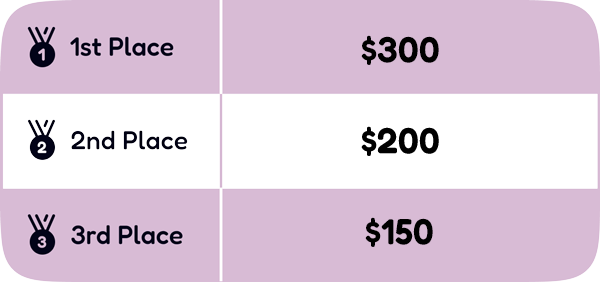
Join thousands of students worldwide in this exciting English language competition and discover your potential on the global stage!