What is our English Online Exam? (Juniors)
The NextGen Olympiad English Online Exam is designed to enhance and celebrate young linguistic minds through our prestigious international competition. Built on Australian curriculum standards, this exam offers students worldwide the opportunity to demonstrate their English language proficiency and compete with peers globally.
Our English Online Exam features 25 carefully crafted multiple-choice questions designed to test reading comprehension, vocabulary knowledge, grammar understanding, and language reasoning skills appropriate for each age group. Students have 60 minutes to complete the exam, with questions covering essential English language concepts that encourage critical thinking and effective communication skills.
Exam Format
- 25 multiple-choice questions
- 50 minute duration
- Cambridge curriculum-aligned Content
- Multi-language support available
- Secure online proctoring
Scoring System
- 4 points for each correct answer
- 3 wrong answers void 1 correct answer
- Maximum score: 100 points
Global Round Qualification
The top 60% of performers will qualify for our prestigious Global Round in Sydney, Australia (April 2027), featuring enhanced prizes, international recognition, and an unforgettable educational experience.
Important Information
- Exam Date: 24 October 2026
- Registration Fee: IDR525K per student
- Download Complete Exam Rules & Guidelines
- Access All Sample Question Papers
- Download Online Round Poster
The Levels It's Broken Into
There are three categories of participation for our Junior English Online Exam:
- Category 1– Ages 6-7 Years Old (Grade 1-2)
- Category 2– Ages 8-9 Years Old (Grade 3-4)
- Category 3– Ages 10-11 Years Old (Grade 5-6)
Each category is specifically designed with age-appropriate English language concepts including reading comprehension, vocabulary development, grammar fundamentals, and communication skills while maintaining the challenge and excitement that makes our competition both educational and engaging.
Exam Topics
Level 1 - Exam Topics⌄
Year 1-2 (Level 1)
- Nouns and Pronouns – naming words and words that replace them
- Verbs and Adjectives – action/being words and describing words
- Basic Punctuation – capital letters, full stops, question marks, exclamation marks
- Rhyming Words and Opposites – recognising rhyme and antonyms
- Singular and Plural Nouns – adding 's' or 'es'
- Days, Months, and Seasons – names, spelling, and order
- Compound Words – joining two shorter words to make a longer one
- Synonyms – simple words with similar meanings
- Types of Sentences – statements, questions, commands, exclamations
- Reading Comprehension – understanding short passages and answering who, what, where, when questions
Level 2 - Exam Topics⌄
Year 3-4 (Level 2)
- Nouns, Pronouns, and Adjectives – including proper nouns, expanded noun groups, and simple collective nouns
- Verbs, Adverbs, and Tenses – present, past, future; simple perfect tense introduction; adverbs for how, when, where
- Punctuation – capital letters, full stops, commas, apostrophes for contractions and possession, quotation marks for speech
- Synonyms and Antonyms – expanding vocabulary and meaning
- Prefixes and Suffixes – common word beginnings and endings that change meaning
- Compound and Complex Sentences – using conjunctions (and, but, because, although, etc.)
- Paragraph Structure – topic sentences, supporting details, concluding sentences
- Reading Comprehension – identifying main idea, details, sequence, cause/effect, and making simple inferences
- Figures of Speech – similes, simple metaphors, alliteration, and onomatopoeia
- Homophones and Homonyms – words that sound alike or have multiple meanings
- Spelling and Word Choice – commonly confused words and silent letters
Level 3 - Exam Topics⌄
Year 5-6 (Level 3)
- Advanced Nouns, Pronouns, and Adjectives – abstract nouns, collective nouns, relative pronouns, expanded noun groups
- Verb Forms and Voice – perfect and continuous tenses, irregular verbs, active and passive voice
- Punctuation and Grammar Conventions – commas for clauses and lists, apostrophes for possession, quotation marks, colons, semicolons, hyphens, parentheses, direct and reported speech
- Vocabulary and Word Study – synonyms, antonyms, nuanced vocabulary, idioms, and figurative expressions
- Prefixes, Suffixes, and Root Words – including Latin and Greek roots to expand vocabulary
- Sentence Construction – varied sentence beginnings, compound–complex structures, parallel structures, and nominalisation (intro)
- Paragraph and Text Cohesion – topic sentences, linking devices (however, therefore, moreover), maintaining flow between paragraphs
- Reading Comprehension and Analysis – summarising, inferencing, identifying author's purpose, distinguishing fact from opinion
- Literary Techniques – simile, metaphor, personification, alliteration, onomatopoeia, hyperbole, imagery, symbolism (intro level)
- Poetry and Drama – analysing stanza and verse, dramatic conventions, performing texts
- Media and Digital Literacy – analysing advertisements, identifying visual language features, navigating websites for reliable information
What is the timeline for the Online Olympiad?
Registration Starts
1 Aug 2026
Registration Closes
17 Oct 2026
Exam Time
24 Oct 2026
Results Revealed!
31 Oct 2026
Prizes
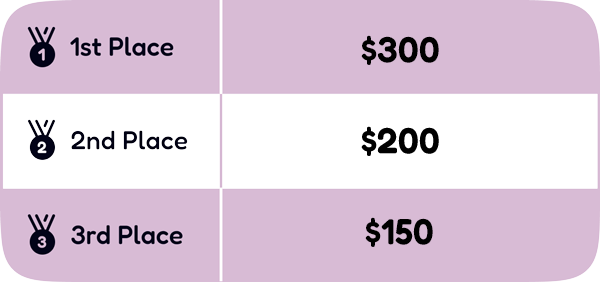
Join thousands of students worldwide in this exciting linguistic journey and discover your potential on the global stage!